📰 DIY News
Latest news, recalls, safety alerts, new tools, and homeowner updates.
DIY Latest News: What Homeowners Need to Know
September, 2026
Planning a home repair or weekend project? Before you get started, check these important product safety alerts and home maintenance updates. From electrical hazards to fire risks, these developments offer practical reminders that can help homeowners protect their families and avoid costly mistakes.
1. Air Conditioner Recall: Check for a Fire Hazard
On September 3, 2026, Daikin Comfort Technologies announced a recall of certain Amana through-the-wall air conditioners and heat pumps. A component on the control board can short circuit and emit flames, creating a fire risk.
The recall covers specific models beginning with PB, including certain units sold nationwide between April 2025 and June 2026.
What homeowners should do: Check the model and serial number on your unit against the official recall notice. If your equipment is affected, stop using it and follow the manufacturer's instructions for obtaining a refund.
Read the official Amana recall notice.
2. Pool Heater Recall: Carbon Monoxide Can Be Deadly
On September 17, the U.S. Consumer Product Safety Commission (CPSC) announced a recall of approximately 4,600 Hayward 400,000 BTU Universal-HC Series pool heaters. Affected HDFS400 models can produce dangerous levels of carbon monoxide during operation.
Carbon monoxide is an invisible, odorless gas that can cause serious injury or death.
What homeowners should do: Check whether your heater is an affected HDFS400 model. Stop using it immediately if it is covered by the recall, and contact Hayward to arrange a free inspection and repair by a qualified technician. Do not attempt to repair gas-burning equipment yourself.
Read the official Hayward recall notice.
3. Dresser Safety Warning: Prevent Tip-Over Accidents
On September 17, the CPSC warned consumers about Jocoevol six-drawer dressers that can tip over if they are not properly secured. The unstable furniture poses tip-over and entrapment hazards that can seriously injure or kill children.
What homeowners should do: Check whether your dresser is covered by the warning. Follow the CPSC's instructions to stop using the affected furniture and either dispose of it appropriately or anchor it securely to the wall as directed. Inspect other tall furniture in your home and use suitable anti-tip hardware according to the manufacturer's instructions.
Read the official Jocoevol dresser warning.
4. Pool Drain Covers: Check Before Using Your Pool
On September 17, the CPSC warned consumers about certain Lanyitongke pool drain covers that violate mandatory safety requirements. The covers lack required product markings, service-life information, installation instructions, and maintenance instructions. They pose entrapment and drowning hazards.
What homeowners should do: Check your pool drain covers and their documentation. If you have the affected covers, follow the CPSC's instructions to remove, replace, and dispose of them. Keep the pool closed until the covers have been replaced with compliant products.
For pool safety, use a qualified pool professional if you are unsure which drain cover your system requires.
Read the official Lanyitongke pool drain cover warning.
5. Heated Blankets and Heating Pads Recalled Over Fire Risk
On September 17, the CPSC announced a recall of approximately 195,000 JKMAX heated blankets and heating pads. Their internal heating elements can overheat, creating fire and burn hazards. The company reported 577 incidents involving products smoking, melting, or burning, including 53 burn injuries.
What homeowners should do: Check the brand and model number on your blanket, heating pad, remote, and packaging. If your product is included in the recall, stop using it immediately and contact JKMAX for the announced refund.
Do not continue using a heating product that smells burnt, shows damage, or behaves unusually.
Read the official JKMAX recall notice.
6. Electric Grill Recall: Check the Grounding Protection
On September 17, the CPSC announced a recall of approximately 10,605 Char-Broil Bistro Pro electric grills. The grounding wire for the heating element can disconnect, causing the grill to lose electrical fault protection and creating a risk of electric shock.
The recall covers specific models and manufacturing date codes, so not every Char-Broil grill is affected.
What homeowners should do: Check your grill's model number and manufacturing date code against the official notice. If your grill is included, stop using it immediately and contact Char-Broil for the free repair kit and instructions. Do not attempt to improvise an electrical repair.
Read the official Char-Broil recall notice.
What Homeowners Should Do Next
These safety alerts share a common lesson: checking equipment before use is just as important as maintaining it.
Before your next DIY project:
Check the model and serial numbers of appliances and equipment against official recall notices.
Inspect electrical tools and outdoor equipment for damage.
Secure tall furniture to help prevent tip-over accidents.
Check pool and spa safety equipment before allowing anyone to swim.
Stop using products covered by safety warnings and follow the official remedy instructions.
For routine projects, our DIY resources and calculators can also help you plan materials and estimate costs before buying supplies.
Frequently Asked Questions
Where can I check for home product recalls?
Visit the U.S. Consumer Product Safety Commission's recall page. Search by product name, brand, or model number and follow the instructions in the specific notice.
Should I repair a recalled product myself?
Not unless the manufacturer or official recall instructions specifically authorize that remedy. Some products require professional repairs, replacement, or disposal. Follow the instructions for the exact product involved.
How can I make DIY projects safer?
Read the manufacturer's instructions, use the right protective equipment, inspect tools before use, and avoid repairs involving hazards beyond your training. Electrical, gas, structural, and pool-system work may require a qualified professional.
Final reminder: This roundup covers six selected safety developments announced in September 2026. It is not a complete list of every product recall or home improvement story from that month. Check the linked official notices for affected models and the latest remedy instructions.


Multiple Electric Pressure Washers Recalled Over Electrocution Risk: What DIYers Need to Check
August, 2026
If you own an electric pressure washer, it is worth checking the model before using it again.
Several electric pressure washers were recalled during August after the U.S. Consumer Product Safety Commission (CPSC) identified shock and electrocution hazards involving missing ground-fault circuit-interrupter (GFCI) protection and, in some cases, short power cords that could encourage the use of extension cords.
The recalls involve several different brands and models sold online, including products sold through major retailers and marketplaces.
Which Pressure Washers Were Recalled?
Here are several of the August recalls DIYers should know about:
Workbless Electric Pressure Washers
The CPSC recalled about 2,200 Workbless pressure washers, models WB0301 and WB0302.
The machines reportedly lack an integral GFCI and an adequate-length power cord. They were sold through Amazon, Best Buy, Kohl's, Lowe's, Overstock, Target and Walmart.
The CPSC says consumers should stop using the recalled machines immediately and contact Workbless for a refund.
COMMOWNER Electric Pressure Washers
About 1,694 COMMOWNER pressure washers, models HD14P-Z and HX18, were recalled.
The machines lack an integral GFCI, and their short power cord may encourage consumers to use an extension cord. The recalled units were sold on Amazon.
Consumers should stop using them and contact the importer for a refund.
YERYORK Pressure Washers
The CPSC also recalled about 300 YERYORK pressure washers, model YE-006.
These 2.5 GPM electric units do not have the required integral GFCI. They were sold on Amazon and are identifiable by the model number on the label near the handle.
The CPSC says affected owners should stop using the machines and contact YERYORK for a refund.
Steelite Electric Pressure Washers
About 128 Steelite pressure washers, model AZ6041VC, were recalled.
These units also lack an integral GFCI and an adequate-length power cord. They were sold on Amazon.
Affected consumers should stop using the pressure washer and contact Longer 3D for a refund.
There was also a smaller SUGIFT recall involving 13 units of model LTBBHG006, sold through Best Buy's website.
Why Is GFCI Protection So Important?
A GFCI is designed to interrupt electrical power when it detects an imbalance in electrical current.
That matters with pressure washers because you are working around water and electricity at the same time.
The problem with the recalled machines isn't simply that they are electric. The CPSC specifically identified the lack of integral GFCI protection as part of the shock and electrocution hazard.
A short power cord can create another problem. If someone reaches for an extension cord simply because the factory cord doesn't reach far enough, the electrical setup may become unsafe.
Do not assume an extension cord makes a recalled pressure washer safe. It doesn't.
What Should DIYers Do?
If you own an electric pressure washer, take a few minutes to check it.
1. Find the brand and model number.
Look for a product label on the machine. Model numbers can be printed on the back, top or another part of the housing.
2. Check the CPSC recall database.
Search the exact brand and model rather than relying only on the appearance of the machine.
3. If your machine is recalled, stop using it.
Don't keep using it because it has worked without a problem so far. A recall identifies a potential safety problem with the product.
4. Follow the manufacturer's recall instructions.
The remedy may involve a refund, replacement or another specific procedure.
5. Don't modify the machine yourself.
Adding an extension cord, changing electrical components or attempting a homemade repair isn't a substitute for the official recall remedy.
You can check the latest recall information directly through the CPSC Recalls database.
What If My Pressure Washer Isn't on the Recall List?
That doesn't automatically mean you can ignore basic electrical safety.
Before using an electric pressure washer:
Keep electrical connections away from standing water.
Inspect the power cord and plug for damage.
Use the electrical protection specified by the manufacturer.
Never use damaged electrical equipment.
Keep the machine and electrical connections away from children.
Follow the manufacturer's instructions for outdoor use.
Never assume that a longer extension cord is automatically a safe solution.
If you're unsure about the electrical setup, stop and get qualified help rather than experimenting with it.
A Simple DIY Rule: Water + Electricity = No Shortcuts
Pressure washers are useful tools for cleaning driveways, patios, siding, vehicles and outdoor equipment. But they're also powerful electrical machines operating around water.
That's why this recall is worth paying attention to.
And there is a bigger lesson here for DIYers: before using an inexpensive tool you bought online, check the model number and recall information. A five-minute check can be worth far more than the cost of the tool.
For more practical home-project information, you can also follow our DIY News section and our real-world Bedroom Renovation Cost Breakdown, where I share what I actually spent and learned during a renovation project.
Buying a Replacement Pressure Washer?
If your pressure washer is recalled and you need another one, don't make the decision based only on PSI or price.
Look at:
Manufacturer instructions
Warranty and support
Intended use
Safety certifications and labeling appropriate for the product
For DIY Handymen, the goal isn't to push you toward the most expensive tool. Buy the safest tool that actually fits the job.
DIY Handymen may earn a commission from qualifying purchases made through selected product links. This does not affect the price you pay and does not influence our safety recommendations.
Bottom Line
Several electric pressure washers were recalled during August because of shock and electrocution hazards.
If you own an electric pressure washer, check the brand and model number against the CPSC recall database before your next cleaning job.
If your machine is included in a recall, stop using it and follow the official remedy instructions.
A pressure washer can save hours of hard work. It isn't worth taking a shortcut with electrical safety.
Source: U.S. Consumer Product Safety Commission (CPSC).


What Makes a Building Material Durable? What Every Homeowner Should Know


July, 2026
When planning a home improvement project, one of the biggest decisions is choosing the right building material. Many products are advertised as durable, but durability means different things depending on where and how the material is used.
A material that performs well in one environment may not be the best choice in another. Understanding the strengths and limitations of common building materials can help homeowners make better long-term decisions.
What Does "Durable" Really Mean?
A durable building material is designed to withstand everyday use and environmental conditions over time. Depending on the application, durability may include:
Resistance to moisture
Resistance to rot
Resistance to rust and corrosion
Protection against termites and insects
Ability to withstand sunlight and weather
Lower maintenance requirements
Long service life
No single material is superior in every situation. Every option has advantages and trade-offs.
Fiberglass as an Example
Fiberglass is one example of a durable construction material used in products such as exterior doors, window frames, wall panels, and other building components.
Some of its advantages include:
Does not rot like wood.
Does not rust like steel.
Resists termites and many insects.
Requires relatively little maintenance.
Performs well in humid and coastal environments.
These characteristics make fiberglass an attractive option for many homeowners.
Every Material Has Trade-Offs
Durability does not mean a material is indestructible.
Fiberglass, for example, may:
Crack from heavy impacts.
Require specialized repair methods.
Cost more upfront than some traditional materials.
Need proper installation to achieve its expected lifespan.
These trade-offs do not make fiberglass a poor choice. They simply highlight the importance of selecting the right material for the right application.
What About Safety?
Homeowners often ask whether fiberglass is safe.
In most finished products, fiberglass fibers are enclosed within a hardened resin. Under normal household use, these products generally do not release fibers into the air.
Extra precautions are recommended when fiberglass products are:
Cut
Sanded
Ground
Drilled extensively
Removed during demolition
These activities can create dust that may irritate the skin, eyes, or respiratory system. Wearing appropriate personal protective equipment, such as safety glasses, gloves, and a suitable dust mask or respirator, helps reduce exposure during those tasks.
Other Durable Materials
Fiberglass is only one example. Depending on the project, homeowners may also consider:
Pressure-treated lumber
Fiber cement products
Composite decking
Galvanized or stainless steel
Aluminum
Engineered wood products
Masonry and concrete
Each material has its own strengths, maintenance requirements, expected lifespan, and cost.
Questions to Ask Before Choosing Any Material
Before purchasing materials for your next project, ask yourself:
Will it be used indoors or outdoors?
Will it be exposed to moisture?
Is insect resistance important?
How much maintenance am I willing to perform?
Can the material be repaired if damaged?
What is the expected lifespan?
Does the higher initial cost provide better long-term value?
Answering these questions can help you select a material that fits both your project and your budget.
Making a Smarter Decision
The best building material is not always the newest or the most expensive.
Instead, choose materials based on:
Performance
Durability
Maintenance requirements
Installation quality
Local climate
Long-term ownership costs
A well-informed decision today can reduce maintenance, extend the life of your project, and save money over time.
Related DIY Handymen Articles
Continue learning with these helpful resources:
Recommended Tools and Materials
If you're planning a home improvement project, consider comparing:
Consumer Alert: Over 554,000 Kobalt Yard Power Tools Recalled Due to Fire Risk
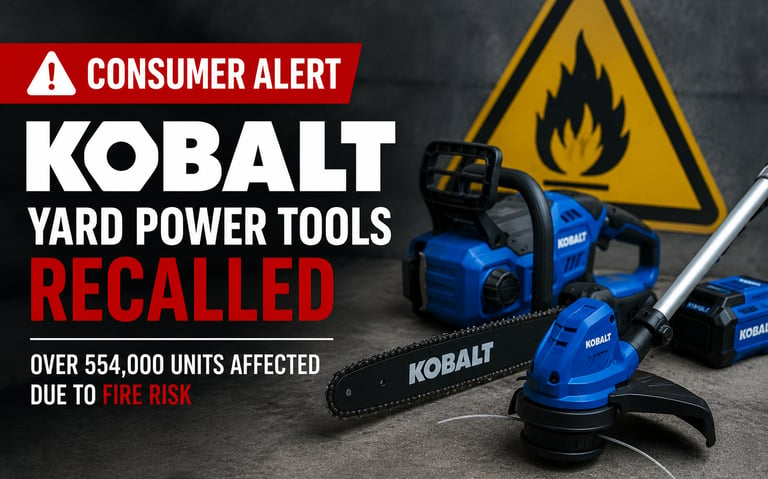
If you recently purchased a Kobalt cordless yard power tool, now is a good time to check whether your equipment is included in a nationwide recall.
The U.S. Consumer Product Safety Commission (CPSC) announced that approximately 554,780 Kobalt 24V and 48V yard power tools and compatible USB-C batteries have been recalled because the batteries can short-circuit when charged through the USB-C port while they remain installed in the tool. This creates a potential fire hazard.
Which Products Are Affected?
The recall includes certain Kobalt outdoor power equipment sold at Lowe's stores and online between January and May 2026, including:
Chainsaws
String Trimmers
Leaf Blowers
Lawn Mowers
Pruning Saws
Only products using the affected 24V or 48V Kobalt USB-C batteries are included in this recall.
What Is the Problem?
According to federal safety officials, charging these lithium-ion batteries through the USB-C port while the battery is still attached to the tool may cause the battery to short-circuit.
Greenworks, the manufacturer, has received 34 reports involving batteries that produced smoke, sparks, or caught fire during charging. At the time of the recall announcement, no injuries or property damage had been reported.
What Should You Do?
If you own one of the affected products:
Stop charging the battery through the USB-C port while it is attached to the tool.
Check whether your battery and tool are part of the recall.
Contact Greenworks to register for the recall remedy.
Eligible consumers will receive a free replacement battery, along with updated instructions, a charger adapter, a warning label, and a prepaid shipping label for returning the recalled battery.
Why This Matters
Battery-powered outdoor tools have become increasingly popular because they are quieter, require less maintenance, and eliminate the need for gasoline. However, lithium-ion batteries should always be handled according to the manufacturer's safety instructions.
Even if your equipment is not included in this recall, it's a good reminder to inspect batteries regularly, use approved charging methods, and discontinue use if you notice overheating, smoke, unusual odors, or visible damage.
🛠 DIY Handymen Tip
If you own a recalled product, stop using it immediately until you've confirmed whether it is affected. Always follow the manufacturer's or U.S. Consumer Product Safety Commission (CPSC) instructions before using the product again.
Source: U.S. Consumer Product Safety Commission (CPSC) Recall Notice and Greenworks Tools Recall Information.
Stay Updated
Get DIY tips, repair guides, and home maintenance advice delivered to your inbox.
© 2026 DIY Handymen. All Rights Reserved.
DIY guides, repair tips, and home maintenance
information for homeowners.


Some links in this article are affiliate links. If you make a qualifying purchase through them, we may earn a commission at no additional cost to you.